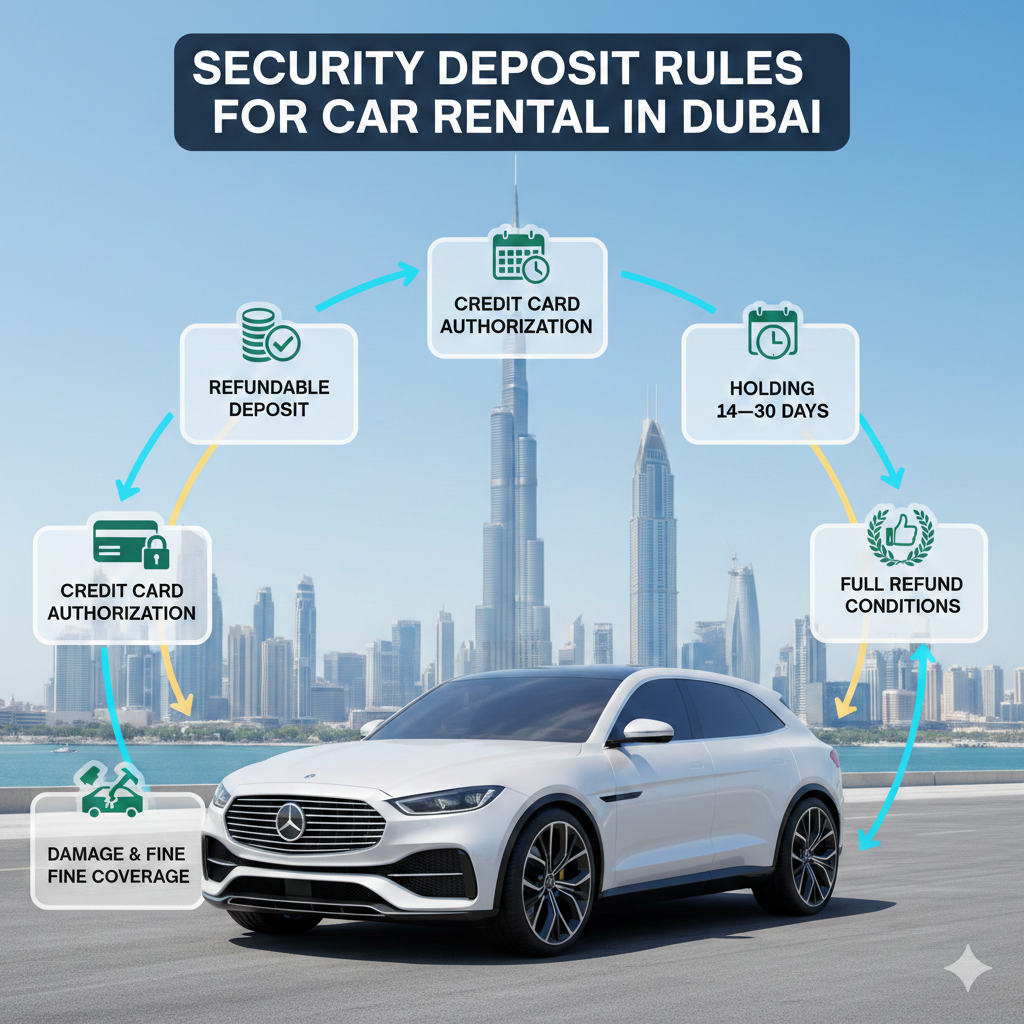
Security deposit rules for car rental in Dubai are designed to protect rental companies against fines, damages, late returns, and contract violations. Every renter must understand how a rental security deposit works, how it is held, and when it is refunded. A clear understanding prevents disputes and ensures a smooth rental experience.
What a Car Rental Security Deposit Means
A car rental security deposit is a temporary blocked amount placed on a credit card as a financial guarantee. It is not a charge but a holding authorization. The deposit covers traffic fines, Salik toll charges, parking penalties, minor damage, fuel differences, and contract breaches.
Key semantic elements connected to the deposit system include:
security deposit hold, refundable deposit policy, rental guarantee amount, credit card authorization, deposit blocking period, temporary bank hold, vehicle protection deposit, rental agreement liability, fine coverage deposit, damage security buffer, insurance excess coverage, rental risk protection, deposit refund timeline, post-rental inspection hold, traffic fine safeguard, toll charge protection, administrative processing buffer, refundable car rental bond, deposit clearance procedure, rental liability shield.
How the Deposit Is Collected
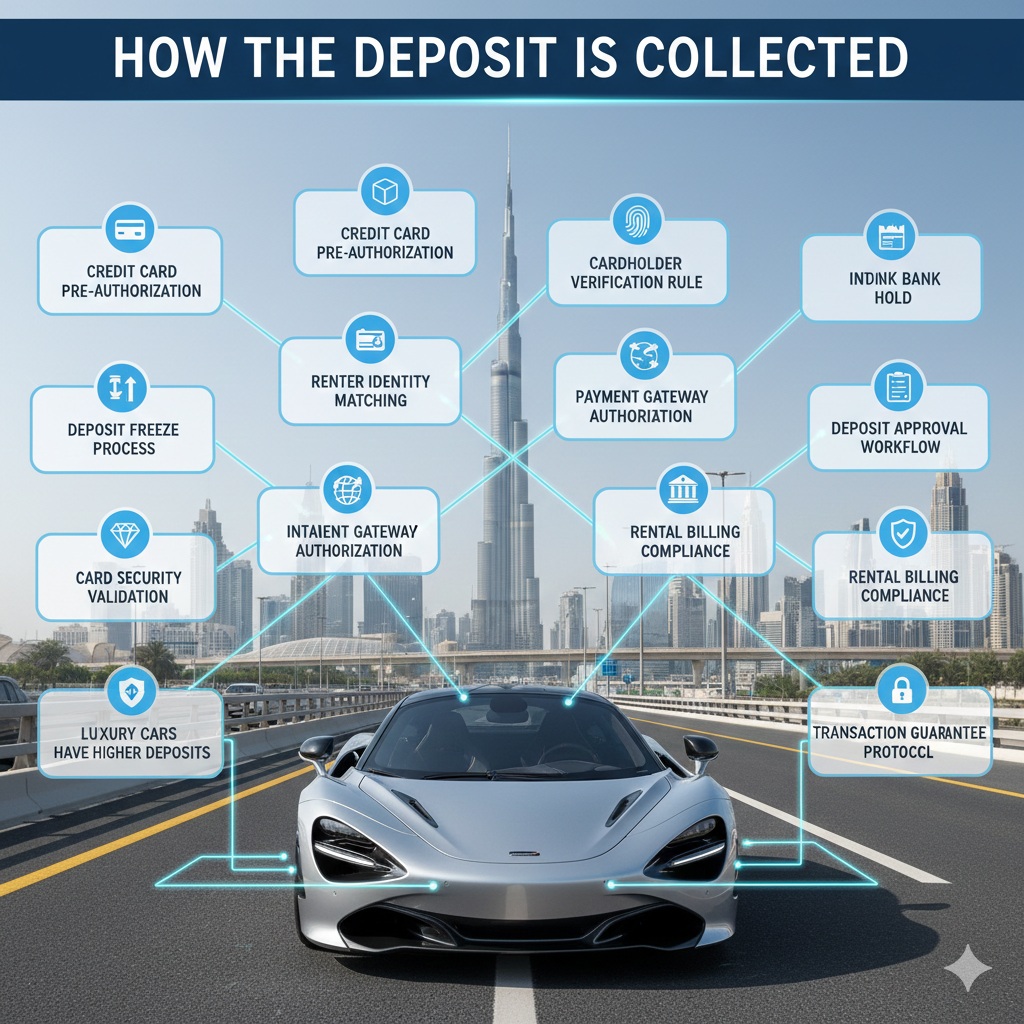
Most rental agencies require a credit card under the renter’s name. Debit cards are rarely accepted for deposit authorization due to risk management policies. The amount varies by car category.
Common deposit collection rules:
credit card pre-authorization, deposit freeze process, cardholder verification rule, renter identity matching, payment gateway authorization, international bank hold, deposit approval workflow, rental billing compliance, card security validation, transaction guarantee protocol.
Luxury vehicles usually carry higher deposits because repair costs and insurance excess are higher. Economy cars have lower deposit thresholds.
Typical Security Deposit Ranges
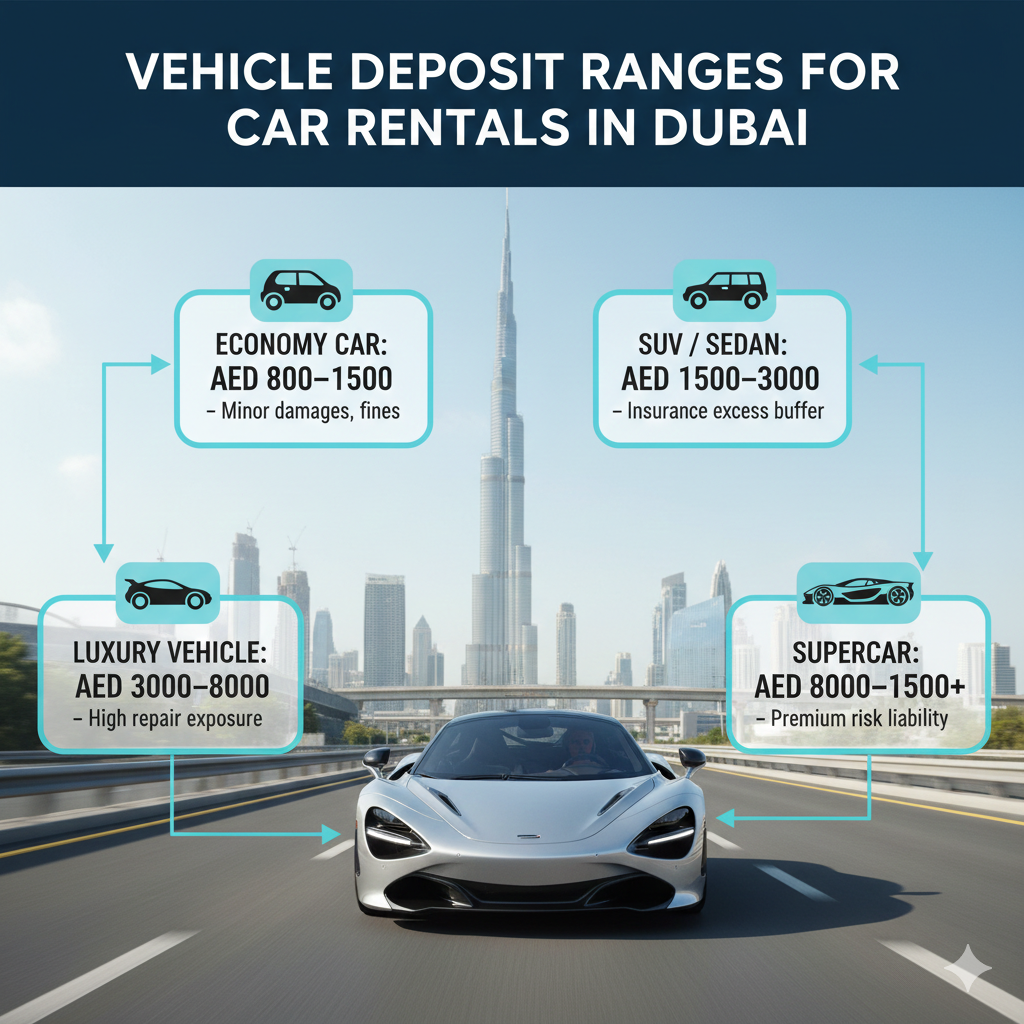
| Vehicle Category | Average Deposit Range (AED) | Risk Coverage Purpose |
|---|---|---|
| Economy Car | 800 – 1500 | Minor damages, fines |
| SUV / Sedan | 1500 – 3000 | Insurance excess buffer |
| Luxury Vehicle | 3000 – 8000 | High repair exposure |
| Supercar | 8000 – 15000+ | Premium risk liability |
These ranges reflect insurance excess structures, repair pricing, and fine liability exposure.
Deposit Holding Period Rules
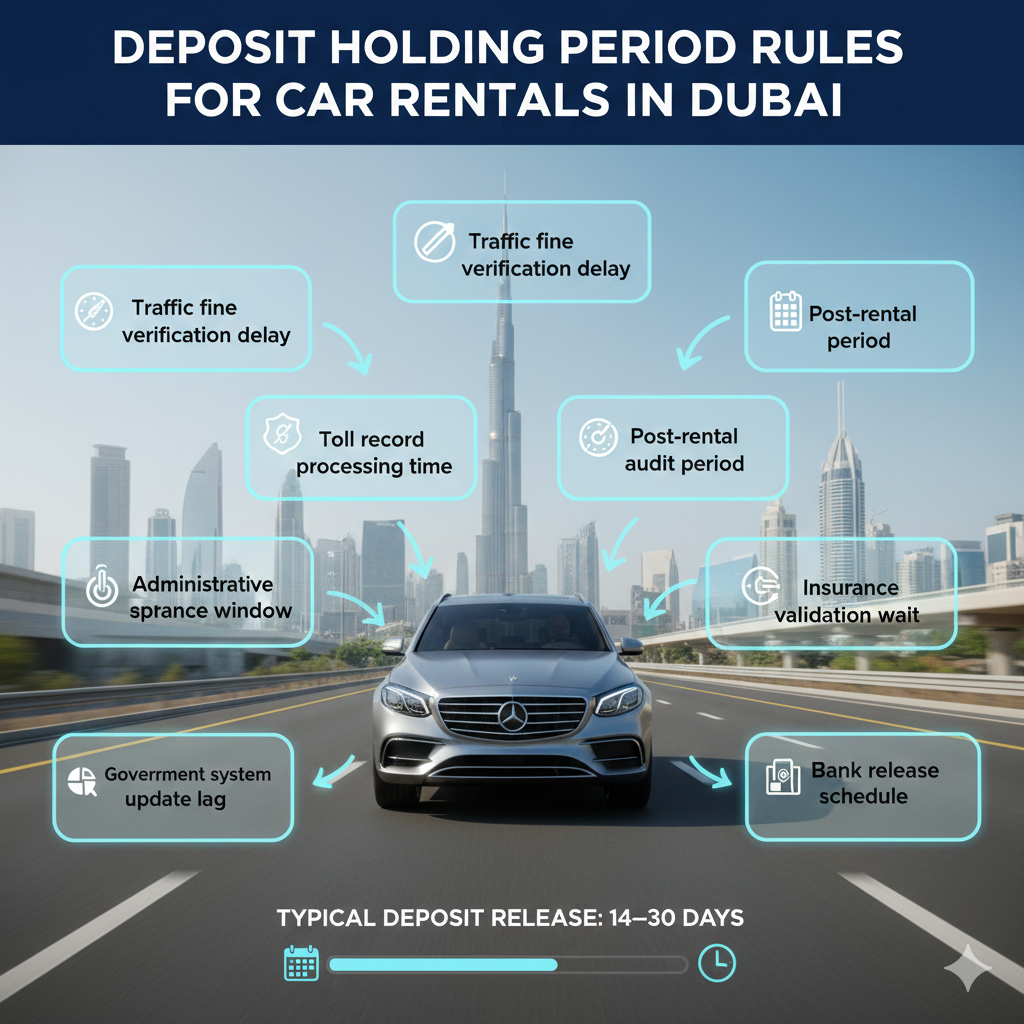
Security deposits are not released immediately after return. The hold period exists because traffic fines in Dubai are reported with delay.
Standard holding logic includes:
traffic fine verification delay, toll record processing time, authority reporting window, post-rental audit period, administrative clearance cycle, bank release schedule, insurance validation wait, government system update lag, penalty confirmation buffer.
Typical release timeline: 14–30 days depending on bank processing speed and government reporting.
Conditions That Affect Deposit Refund
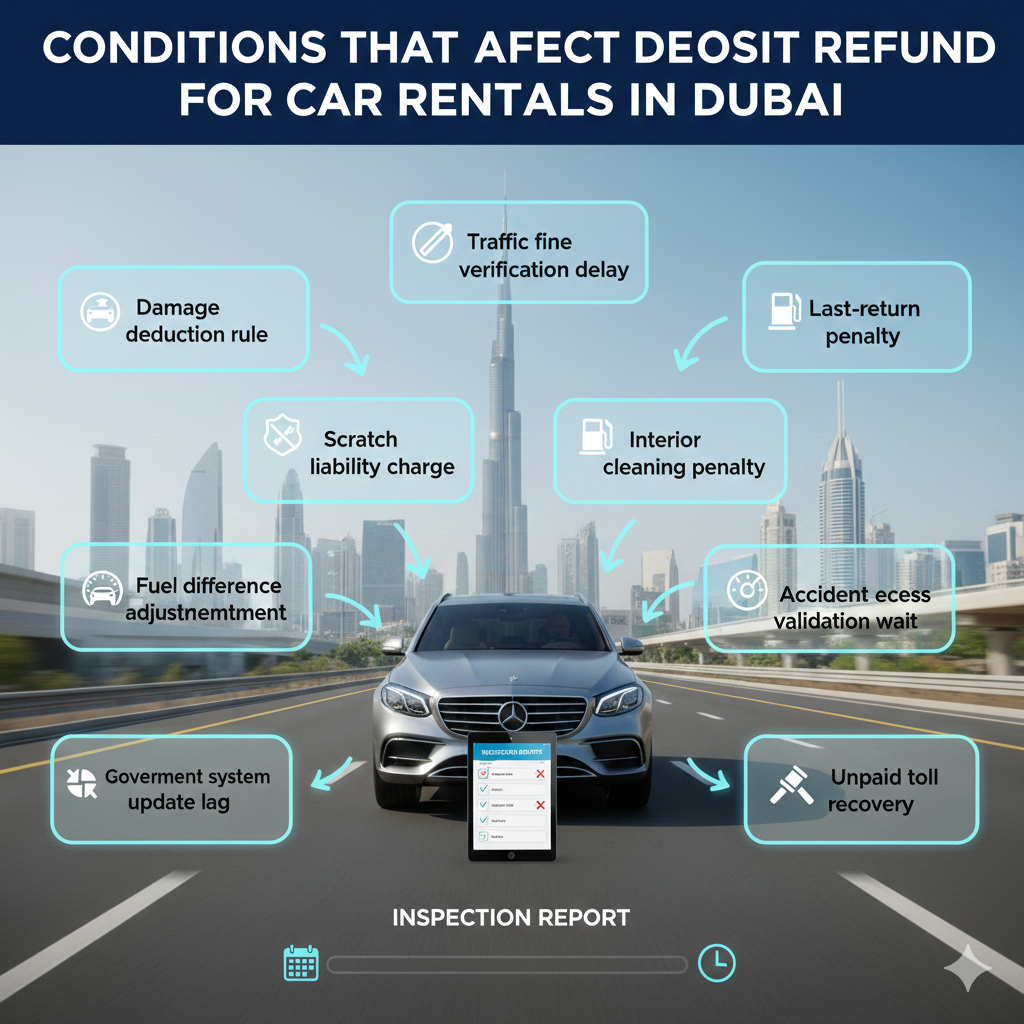
A full refund occurs only when the car is returned without violations. Partial deductions happen under specific conditions:
damage deduction rule, scratch liability charge, interior cleaning penalty, fuel difference adjustment, smoking violation fee, late return penalty, mileage overage charge, accident excess deduction, contract breach fine, unpaid toll recovery.
Inspection is done immediately after return and documented in a digital condition report.
Case Study: Deposit Dispute Resolution
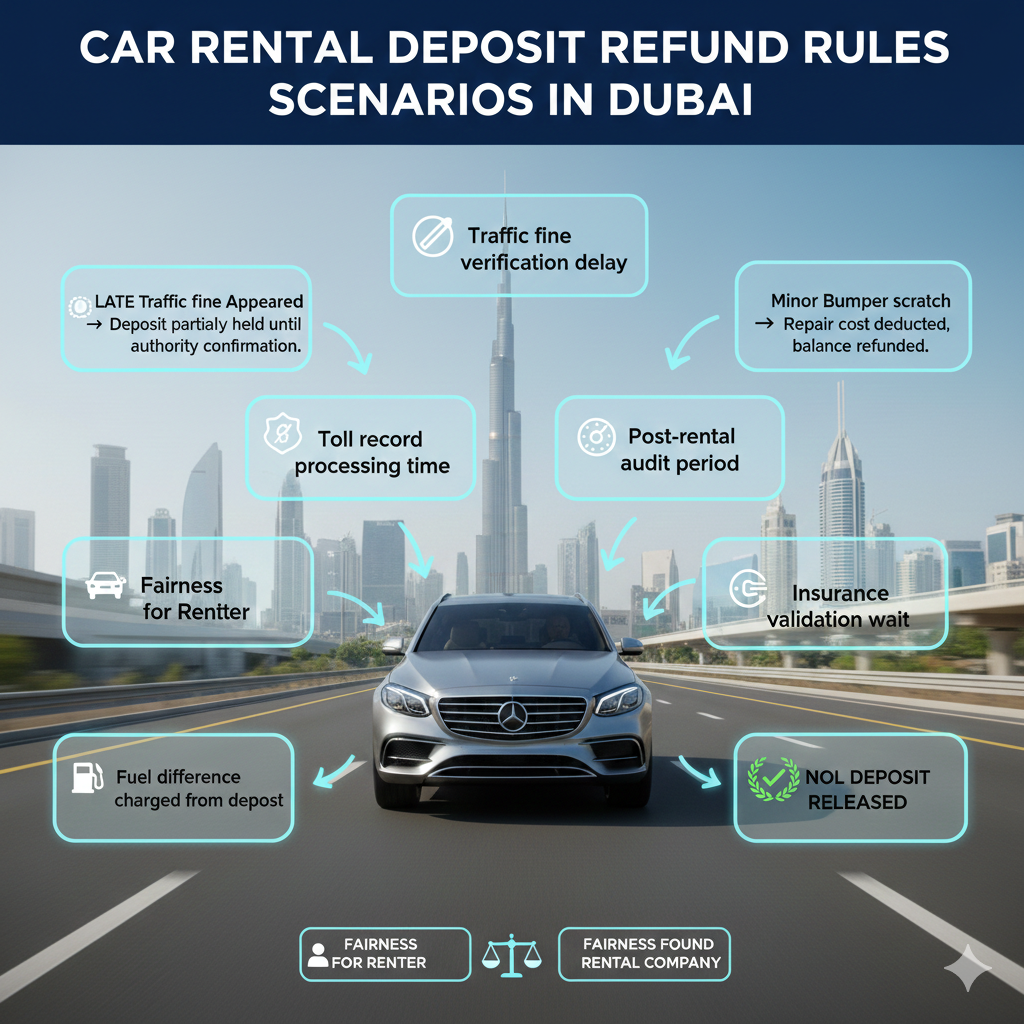
| Scenario | Issue | Resolution Outcome |
|---|---|---|
| Late traffic fine appeared | Customer requested early refund | Deposit partially held until authority confirmation |
| Minor bumper scratch | Damage detected after inspection | Repair cost deducted, balance refunded |
| Fuel shortage | Tank returned below agreement | Fuel difference charged from deposit |
| No issues found | Clean return | Full deposit released |
This system ensures fairness for both renter and rental company.
Legal Framework Behind Deposit Rules
Security deposit practices follow UAE commercial rental standards. These protect companies from fraud while ensuring customer rights.
Important regulatory concepts include:
rental contract enforcement, consumer protection compliance, liability documentation rule, insurance excess obligation, rental dispute protocol, financial transparency requirement, deposit accountability standard, contract signature legality, vehicle custody responsibility, commercial rental law alignment.
Professional Rental Transparency
Reputable providers clearly explain deposit rules before booking. Transparent agencies provide written policies, inspection photos, and refund timelines. Services like AtoZ Super Car Rental Dubai follow structured deposit documentation to avoid misunderstandings.
Final Understanding
A security deposit in Dubai car rental is a structured financial safeguard. It is governed by insurance excess rules, traffic authority delays, and contractual liability protection. When the renter follows agreement conditions and returns the vehicle clean, the deposit is fully refundable within the defined holding window.
Understanding deposit authorization, liability coverage, and refund timing ensures a stress-free rental experience.
What is a car rental security deposit?
A car rental security deposit is a refundable financial guarantee held through credit card authorization to cover fines, toll charges, damage liability, insurance excess, and rental contract violations. It functions as a temporary deposit hold, rental protection buffer, and liability safeguard.
Is the security deposit charged or blocked?
The amount is blocked, not charged. It is a pre-authorization hold, temporary bank freeze, refundable deposit lock, and payment guarantee reservation that remains pending until post-rental clearance.
Why do rental companies require a deposit?
The deposit protects against delayed traffic fines, Salik toll usage, accident excess, misuse penalties, repair exposure, and administrative risk. It acts as a financial security layer and rental liability shield.
Can I pay the deposit with a debit card?
Most companies require a credit card due to authorization reliability, fraud protection, and international banking compliance. Debit approval is rare because deposit recovery risk is higher.
How much is the average deposit?
Deposit amounts depend on vehicle class. Economy deposits are lower, luxury and supercar deposits are higher due to insurance excess exposure, repair valuation, and asset protection requirements.